Jamie Humphrey
Head of Culture & Brand Integrity


You set a curfew, and your teenager pushed back hard. Now you're wondering whether it was worth the fight. It's a fair question, and one many parents ask: does a teen curfew protect anything that matters, or does it just create resentment?
The short answer: a teen curfew can support your child's mental health, but only when it's built well.
A reasonable, agreed-upon curfew can protect sleep, reduce risky late-night situations, and strengthen trust between you and your teen. A rigid, unexplained, or unenforced curfew can do the opposite.
At Horizon Recovery, we work with families across the Phoenix area who are navigating these exact struggles.
Sometimes a curfew fight is ordinary teenage boundary-testing. Sometimes it's a sign of something deeper.
If your teen's defiance or risky behavior feels bigger than a phase, our teen mental health treatment in Phoenix can help.
Call our admissions team at (602) 755-7858 to talk it through.
A curfew is more than a time on the clock. It's a set of clear expectations paired with clear consequences: when your teen needs to be home, and what happens if they aren't.
At its best, a curfew provides structure while your teen's brain is still developing. The regions responsible for planning, impulse control, and judgment keep maturing well into the mid-20s, and outside structure helps fill that gap in the meantime.
A curfew also keeps you aware of where your teen is and who they're with, and that kind of parental involvement is one of the strongest protective factors in adolescence.
A curfew isn't magic, though. Whether it helps or hurts depends almost entirely on how it's set and enforced.
For many teens, yes. A well-designed curfew supports mental health in four main ways.
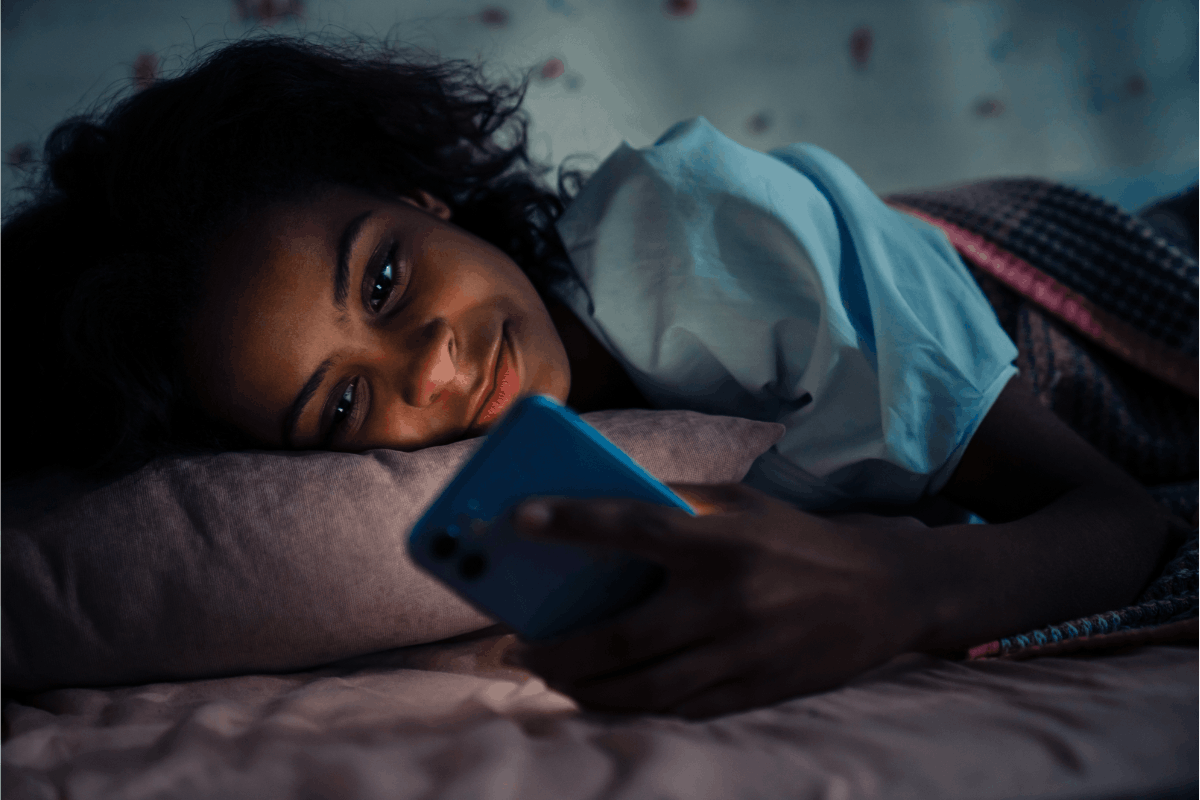
The CDC recommends 8 to 10 hours of sleep per night for teens ages 13 to 18. A curfew helps anchor a consistent wind-down and bedtime, and sleep directly affects mood, focus, and emotional regulation.
The research here is striking: a large study published in the journal Sleep found that teens whose parents set bedtimes of midnight or later were 24% more likely to have depression and 20% more likely to have suicidal thoughts than teens with parent-set bedtimes of 10 p.m. or earlier.
The researchers concluded that earlier parent-set bedtimes may help protect against adolescent depression by increasing how much teens sleep.
Late, unsupervised hours are often when peer pressure, substance use, and unsafe situations are most likely.
Predictable routines help teens balance school, activities, friendships, and rest, which supports steadier moods.
When a curfew is fair and consistent, it teaches your teen that boundaries and love can exist together.
A curfew works against your teen's wellbeing when it feels controlling rather than caring.
An unreasonably strict curfew can make a teen feel their independence is being crushed, and that frustration often shows up as sneaking out, lying, or acting out.
A curfew that cuts too deeply into time with friends can also hurt. Peer connection is a core developmental need in adolescence, and isolation can feed loneliness and low mood.
Trust cuts both ways, too.
A curfew handed down without explanation can tell your teen you don't believe in their judgment.
A curfew you don't enforce teaches them your boundaries don't mean much. Either way, the relationship you're trying to protect takes the hit.
The curfew itself isn't good or bad. How you build it makes the difference.
There's no single right answer, but most families start with an age-based baseline and adjust for maturity, school schedule, and track record. The table below reflects common starting points, and it stays inside Phoenix's legal curfew hours (more on those below).
Age
Typical school nights
Typical weekends
Notes
13–14
8:00–9:00 p.m.
9:00–10:00 p.m.
Firmer structure; plans confirmed in advance
15
9:00 p.m.
10:00 p.m.
Phoenix law applies at 10 p.m. for under-16s
16–17
10:00 p.m.
11:00 p.m.–midnight
More flexibility earned through consistency
18+
Negotiated
Negotiated
Shift toward mutual check-in expectations
Work backward from sleep. A curfew isn't a bedtime. If your teen needs to be up at 6:30 a.m. for school, getting 8 to 10 hours means being asleep somewhere between 8:30 and 10:30 p.m. Build in time to get home, decompress, and put the phone down.
Arizona doesn't have one statewide curfew. Each city sets its own, and many Valley cities follow the same pattern.
In Phoenix, city code makes it unlawful for anyone under 16 to be out in public away from home between 10:00 p.m. and 5:00 a.m., and teens ages 16 and 17 who are out unaccompanied after midnight can be arrested and cited.
Glendale, Peoria, Scottsdale, Mesa, Chandler, Tempe, and a number of other Arizona cities use the same 10 p.m. and midnight cutoffs. Some cities differ. Surprise, for example, uses 10 p.m. to 5 a.m. Sunday through Thursday and midnight to 5 a.m. on Friday and Saturday. Always check your own city's ordinance.
Phoenix's rule has exceptions. It doesn't apply when a teen is with a parent, guardian, or supervising adult, is on an emergency errand, or is doing a specific, legitimate activity their parent has approved. The consequences can be real for families: in most localities, breaking curfew is a misdemeanor, and both the teen and the parent can face penalties such as fines or community service.
For parents, the legal curfew is a helpful outer limit. Your family's curfew can and often should be earlier.
A curfew works best when your teen feels it's fair. That doesn't mean handing over control. It means bringing them into the conversation.
Younger teens generally need earlier curfews and firmer guardrails. Older teens who consistently show responsibility can earn more flexibility. A high school senior heading to college needs room to practice managing their own time. Let the curfew grow as your teen shows they can handle it.
Your teen should know to tell you where they're going, who they'll be with, and how they're getting there and back. If plans change, they let you know. Agree in advance that they'll answer when you reach out for a real reason. These habits reduce late-night panic on both sides.
Decide ahead of time what happens if curfew is broken. Teens who help shape the consequences are more likely to accept them. Keep consequences clear and proportional: a first slip might just call for a conversation, while a repeated pattern might call for something firmer.
Summer, a new job, a driver's license, or a change in school schedule are all good reasons to renegotiate. A curfew that evolves feels like a partnership. One that never changes feels like a sentence.
A digital curfew sets limits on phones and screens instead of time out of the house. It might mean no devices at dinner, or phones charging outside the bedroom after a set hour.
For sleep and mental health, a digital curfew can matter as much as a traditional one. Late-night scrolling delays the body's natural wind-down, and for a teen who is already anxious or depressed, it can mean hours of lost sleep and exposure to content that makes things worse. If you want your teen to buy in, make it a family rule. It's hard to put your phone away while watching a parent scroll.
Sometimes breaking curfew is just normal testing of limits. Sometimes it's a signal. Pay attention if curfew issues show up alongside any of these changes:
Consistent defiance and risky behavior can be connected to underlying mental health or substance use concerns.
You don't need all the answers before reaching out. If something feels off, trust that instinct.
Is It A Phase, or Something More, walks through warning signs in more detail.
If your teen is in immediate danger or talking about suicide, call or text the 988 Suicide & Crisis Lifeline right away, or call 911.
Generally, yes, when they're reasonable, explained, and consistently enforced. Curfews support sleep, reduce late-night risk, and keep parents involved. Overly strict or unenforced curfews tend to backfire.
Many families start around 10 p.m. on school nights and 11 p.m. to midnight on weekends. In Phoenix and many other Arizona cities, unaccompanied 16- and 17-year-olds must be off the streets by midnight.
Under Phoenix city code, teens under 16 can't be out unaccompanied between 10 p.m. and 5 a.m., and teens ages 16 and 17 can't be out unaccompanied from midnight to 5 a.m., with exceptions for emergencies and parent-approved activities.
Most families allow a later weekend curfew, but keep weekend sleep from drifting too far off schedule. Big swings between weeknight and weekend sleep can make Monday mornings, and moods, harder.
Start with a calm conversation about what's going on, then follow through on the consequences you agreed on. If the pattern continues alongside withdrawal, mood changes, or signs of substance use, consider talking to a mental health professional.
A curfew is one small tool in the bigger work of raising a healthy teen. When curfew battles are really a window into deeper struggles, you don't have to figure it out alone.
Horizon Recovery provides compassionate, evidence-based care for teens across Arizona, with a full continuum that includes residential treatment, Partial hospitalization, Intensive Outpatient, and outpatient therapy.
We partner with parents at every step.
Wondering what to expect? Read What Parents Can Expect or learn How Teen Treatment Is Paid For.
Call us at (623) 243-8992 or verify your insurance today.