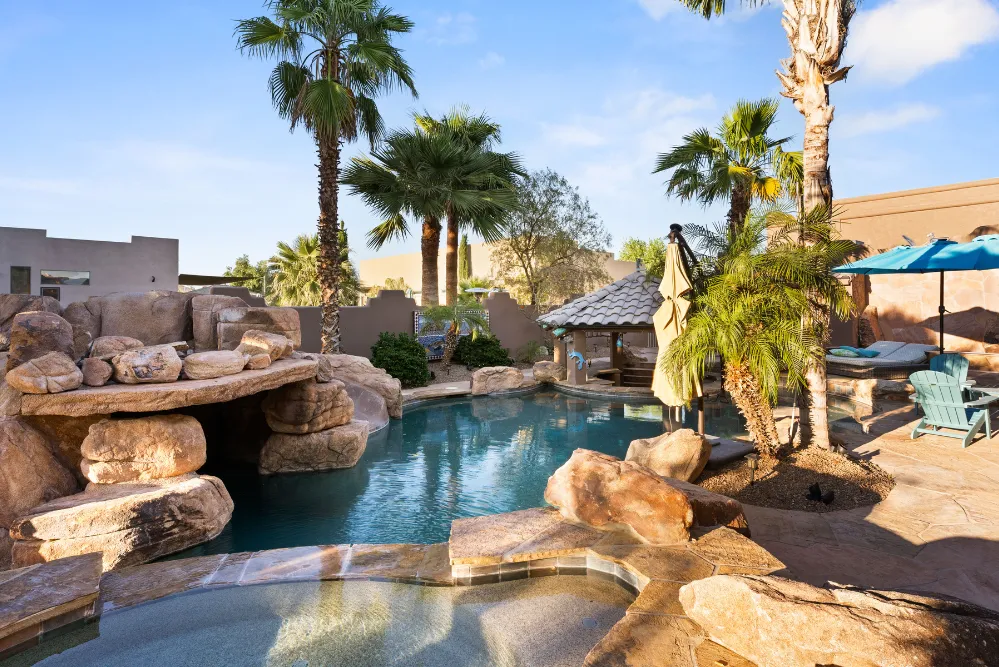
Adolescent Fitness & Wellness Program

Therapy works better when a teenager's body isn't working against them.

When a teen arrives at Horizon Recovery, they're often not sleeping. They're not eating well, and they've been at war with their own nervous system for months. Clinical work matters, but it's harder to access when the physical foundation underneath it is broken.Our Fitness & Wellness Program treats movement, sleep, and nutrition as clinical infrastructure. The result is a teenager who comes home regulated and capable of holding onto their progress.

Learn more about our teen rehab programs in Arizona or verify your insurance now.
Call Now: (623) 243-8992

What the Fitness & Wellness Program Entails

Two integrated pieces. One program.

On-site, every day. 

A full-time Wellness Coordinator (Certified Personal Trainer, credentialed through NASM, ACSM, NSCA, ACE, or an equivalent national body) runs an 8-week curriculum across all Horizon houses. 

Daily programming covers movement, trauma-informed yoga, mindfulness, nutrition, and sleep hygiene. Two evening blocks per week minimum. Two weekend community outings per month minimum. Everything is documented in the EMR alongside clinical notes.

Off-site, once or twice per week. 

Horizon transports residents to The Barbell Saves Project—a Phoenix nonprofit where teens train alongside adults in active recovery. 

Coaches are specifically assigned to the Horizon adolescent group, safety protocols have been reviewed by a physical therapist, and group check-ins are designed with a Licensed Social Worker. Every coach is in recovery.

The 8-Week Curriculum

The curriculum was designed by Daniel Morgan Roberts and is built on the Eight Dimensions of Wellness. This framework was developed in the early 1990s by Dr. Peggy Swarbrick of Rutgers University — built from the lived experience of people in recovery from mental health and substance use challenges — and adopted by SAMHSA, the federal agency that oversees behavioral health care. The coach who runs Horizon’s program was trained on this model. 

Every session follows the same structured arc:

Introduction → Introspection → Direct Instruction → Active Participation → Reflection

Each week pairs the clinical theme a teen is working on in therapy with a corresponding wellness domain, the same concept reinforced through two channels at once.

  • Week 1 — Emotions / Emotional Wellness: You cannot manage what you cannot identify.
  • Week 2 — Anger / Physical Wellness: Anger is energy, and energy can be redirected.
  • Week 3 — Depression & Anxiety / Spiritual Wellness: We are not our thoughts.
  • Week 4 — Cognitive Distortions / Intellectual Wellness: Our thoughts shape our reality.
  • Week 5 — Trauma / Environmental Wellness: Our environment can activate or regulate.
  • Week 6 — Addictive Behaviors / Financial Wellness: What we repeatedly choose, we eventually pay for.
  • Week 7 — Relationships & Boundaries / Social Wellness: Healthy relationships require clear boundaries.
  • Week 8 — Occupational Wellness: Our chosen career affects our quality of life. 

What It's Designed to Produce

Our curriculum is designed to produce a teenager who is sleeping through the night and nourishing their body with real food. 

The deeper goal is a teenager who is actively engaged in their own recovery. Repair at home holds longer when the daily structures that support it (sleep, movement, nutrition) are already practiced.

Why It Works

Physical activity is one of the better-studied behavioral interventions for adolescent depression, anxiety, and emotion regulation. Regular movement reduces depressive symptoms, lowers anxiety, and improves executive function in adolescents. Trauma-informed movement reduces dissociation, while group exercise builds belonging.

The program is built to make that evidence operational:

  • The role is dedicated. Full-time CPT, credentialed and trauma-informed, reporting through the clinical line and documenting in the EMR.
  • The curriculum is structured. Eight weeks, designed by Daniel Morgan Roberts, same session arc every week. Not improvised.
  • The framework is verifiable — and built for recovery. The Eight Dimensions of Wellness was developed at Rutgers by Dr. Peggy Swarbrick from the lived experience of people in recovery, and adopted by SAMHSA. Not invented for this program.
  • The partner is credentialed. Named leadership, PT-reviewed safety protocols, LSW-designed check-ins.
  • The work is documented. Wellness participation goes into the EMR and travels to future providers.
The Barbell Saves Partnership

Almost every recovery community in Phoenix is adult-only. The Barbell Saves Project is the exception, and it's why this partnership exists.

Barbell Saves was founded by Rob Best, who is in long-term recovery from meth and alcohol. Lead coach Tammi Saunders is a Level 3 CrossFit trainer and CrossFit Games competitor. Every coach is in recovery. Adolescent-trained staff are specifically assigned to the Horizon group.

What makes this more than a gym visit is that it shows teens that recovery is attainable and can be fun. The adults training alongside them are living it, and have been for years.

When a teen graduates Horizon, the community doesn’t have to end. Barbell Saves offers free community classes to anyone in recovery — a standing offer of the nonprofit’s — so graduates keep the same gym and the same coaches, at no cost and with no re-enrollment.

Learn About The Barbell Saves Project

How It Fits the Rest of Teen Treatment in Arizona

  • With Clinical Therapies. Each wellness week mirrors the theme the counselor is working on that same week. Same concept, two channels. Therapy is reinforced through the body in real time.

  • With Education. A regulated teen is an available learner. A kid who is sleeping, eating well, and moving engages differently at the desk.

  • With the Neuro Program. Neurofeedback works at the brain level; wellness works at the body level. Both target regulation through different channels.

  • After Discharge. Barbell Saves stays available. The community built during treatment doesn't disappear when treatment ends. 

What's Committed to Every Family

  • Continued access at Barbell Saves, under their standing policy. Barbell Saves offers free community classes to anyone in recovery — a standing offer that is theirs, not a Horizon guarantee. Graduates keep the same gym and the same coaches, at no cost and with no re-enrollment.

  • Wellness records that travel. Wellness participation is documented in the EMR and can be shared with any future provider.

  • Built into the levels where your teen lives at Horizon. The full program — the daily structure, the curriculum, the coaching, and the Barbell Saves trips — runs through residential (RTC) and PHP. At IOP, the daily curriculum steps down with the level of care; Barbell Saves community access continues.

Frequently Asked Questions

Does exercise actually help with teen depression and anxiety?

Yes. It's among the more thoroughly studied behavioral interventions in adolescent mental health. Regular physical activity reduces depressive symptoms and anxiety in adolescents, supports emotion regulation, and compounds the effects of clinical therapy. Trauma-informed movement has also been shown to reduce dissociation, which matters significantly for teens with trauma histories.

Who runs the fitness and wellness program, and what are their credentials?

A full-time Wellness Coordinator. CPT credentialed through NASM, ACSM, NSCA, ACE, or an equivalent national body, with CPR/AED, First Aid, trauma-informed practice, and adolescent development competency. The role reports through the clinical line and documents in the EMR. The 8-week curriculum was designed by Daniel Morgan Roberts.

Is the off-site training safe for an adolescent?

Yes. Safety protocols have been reviewed by a physical therapist, group check-ins are designed with a Licensed Social Worker, and adolescent-trained coaches are specifically assigned to the Horizon group. Horizon staff provide transport and supervision for every visit.

What is The Barbell Saves Project, and why train there?

A Phoenix nonprofit founded by Rob Best (long-term recovery from meth and alcohol), with lead coach Tammi Saunders — Level 3 CrossFit trainer and CrossFit Games competitor. Every coach is in recovery. Nearly every recovery community in Phoenix is adult-only; Barbell Saves is one of the only places a teenager can train inside a real recovery community.

Does the wellness program continue through PHP and IOP, or only in residential?

The full program — the daily curriculum, the off-site visits, the daily programming — runs through residential (RTC) and PHP. When your teen steps down to IOP and is living at home, the daily program steps down with the level of care. What continues is access to the Barbell Saves community.

What happens to the wellness work after my child graduates?

Wellness participation is documented in the EMR and travels to any future provider. And Barbell Saves offers free community classes to anyone in recovery — a standing offer of the nonprofit’s — so graduates keep the same coaches and the same gym, with no re-enrollment and no fees.

A Better Foundation Starts Here
Horizon Recovery is an adolescent treatment center serving teens ages 12 to 20 across residential and outpatient programs in the Phoenix metro area.

Call us at 602-755-7858 or verify your insurance today at no cost.
1200+ Families Served
Teens & Young Adults from 12 to 20 years old