

If your teen seems constantly worried, on edge, or withdrawn, you may be wondering whether it is stress or something more.
This anxiety test for teens is a free screening tool designed for parents. It walks you through common signs of anxiety in adolescents so you can decide whether a professional evaluation makes sense.
This screening takes about two minutes to complete. Your answers stay private, and the results give you a clearer starting point for a conversation with your teen or their doctor.
Call us at (623) 243-8992 to learn more about effective anxiety treatment for teens near you.
Results Disclaimer: This screening is an educational tool based on common signs of adolescent anxiety. A licensed mental health professional can provide a full evaluation and an accurate diagnosis.
Anxiety in teens often shows up differently than it does in adults. Some teens talk openly about their worries, while many express anxiety through behavior instead. Anxiety is among the most commonly diagnosed mental health conditions in children and teens.¹
Common signs include:
Fear and avoidance that persist despite a parent's reassurance can signal an anxiety disorder.² Every teen shows anxiety in their own way, and a pattern of these signs over several weeks is more meaningful than any single behavior.
Several anxiety disorders commonly appear during adolescence:³
Many teens experience symptoms from more than one category. A professional evaluation identifies which type of anxiety is present and guides the right treatment approach.
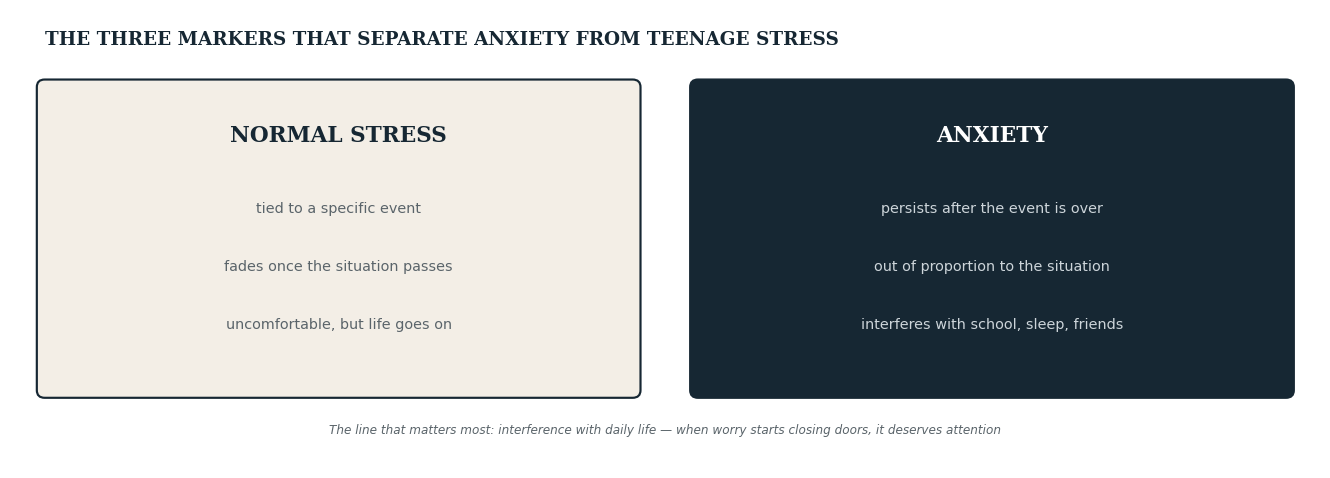
All teenagers feel stress. Exams, friendships, family changes, and thoughts about the future create pressure that is a normal part of adolescence. Some anxiety is an expected part of healthy development at certain ages.⁴ Stress of this kind is usually tied to a specific event and fades once the situation passes.
Anxiety is different in a few key ways. It persists even after the stressful event is over. It feels out of proportion to the situation. Most importantly, it interferes with daily life. When worry keeps a teen from going to school, seeing friends, sleeping well, or enjoying activities they once loved, it has moved beyond typical stress and deserves attention.
If your answers suggest your teen may be struggling with anxiety, here are practical next steps:
Early support makes a real difference. Anxiety disorders respond well to treatment, and teens who get help early build skills they carry into adulthood.
Teen anxiety is highly treatable. Cognitive behavioral therapy and, when appropriate, medication both have strong evidence as safe and effective treatments for adolescent anxiety.⁴,⁵ Most teens improve with the right combination of therapy, family involvement, and healthy daily structure.
Treatment plans work best when they are built around the individual teen. The right level of care depends on how severe the symptoms are and how much they affect daily functioning.
Horizon Recovery provides anxiety treatment designed exclusively for teens and adolescents in the Phoenix metro area.
Our teen mental health treatment programs serve young people across a full continuum of care, from residential treatment through partial hospitalization (PHP), intensive outpatient (IOP), and ongoing outpatient therapy.
Our clinical team blends evidence-based therapies such as CBT and DBT with family therapy, academic support, and wellness services that care for the whole person.
Because we treat adolescents exclusively, every part of our environment is built around the needs of teenagers and their families.
We also measure what happens here. Among the young people who arrived with elevated scores and completed intake and discharge assessments, the group closed 80% of the distance back to the average score for their age on the BASC-3 — and half finished in the healthy range.*1
Horizon Recovery is accredited by The Joint Commission, and families come to us with plans from Aetna, Blue Cross Blue Shield, TRICARE, Humana and others; coverage depends on your plan. Families from across Arizona, including Phoenix, Glendale, Peoria, Buckeye, Scottsdale, and Tucson, trust our team to help their teens find relief from anxiety.
A parent test is a screening tool. It helps you organize what you are seeing at home and decide whether a professional evaluation is the right next step. A diagnosis comes from a licensed mental health professional who can assess your teen directly, review their history, and rule out other causes.
Normal stress is tied to a specific situation and eases once that situation resolves. Anxiety lingers, feels out of proportion to the circumstances, and interferes with school, friendships, sleep, or family life. Duration and impact are the clearest markers of the difference.
Anxiety often shows up in the body before a teen puts it into words. Common physical signs include headaches, stomachaches, nausea, muscle tension, fatigue, a racing heart, and changes in sleep or appetite. When these symptoms appear regularly without a medical cause, anxiety may be the reason.
Seek a professional evaluation when worry lasts for several weeks, feels intense or uncontrollable, or interferes with daily functioning. School refusal, withdrawal from friends, frequent physical complaints, and panic episodes are all signs that it is time to reach out. Trust your instincts as a parent. If something feels off, an evaluation brings clarity either way.
Yes. School refusal is one of the most common ways anxiety shows up in adolescents. Teens may fear social judgment, panic episodes in class, or academic pressure, and staying home brings short-term relief. Avoidance tends to strengthen anxiety over time, which is why early intervention matters so much for school-related anxiety.
Therapy is the foundation of treatment for most teens, and CBT has the strongest research support for adolescent anxiety. Some teens benefit from adding medication, particularly when symptoms are severe or when therapy alone has produced limited progress. The best approach is individualized, and a qualified provider can help your family weigh the options.
You know your teen better than anyone. If this screening confirmed what you have been sensing, our admissions team is ready to help you understand what comes next.
Call Horizon Recovery at (623) 243-8992 or verify your insurance online. We will answer your questions, explain our programs, and help your family take the first step toward relief.
*1 Horizon clinical records. BASC-3, n = 30 young people with intake and discharge assessments who arrived in the elevated range. A standardized clinician-scored battery; 50 is the average score for a young person's age.
1. Centers for Disease Control and Prevention. (n.d.). About children's mental health. https://www.cdc.gov/children-mental-health/about/index.html
.jpg)