Teen Mental Health Treatment in Scottsdale, Arizona

Finding help for your teen can feel overwhelming. Maybe the anxiety keeps growing, or most of your evenings now go to figuring out why school has become so hard.

If you're looking for teen mental health treatment in Scottsdale, Horizon Recovery can help. We serve Scottsdale families through our Phoenix-area programs, with individualized care for adolescents and real support for parents throughout treatment.

Call (623) 243-8992 to talk with our admissions team about options for your teen.
Call Now: (623) 243-8992
AT A GLANCE

Real Outcomes. Measurable Progress.

We publish our results with the number behind every figure.

1,200+

families served

View Treatment Outcomes →

1.1%

of care episodes returned to care within 90 days of discharge (N = 702). 8.5% of young people ever returned, at any level of care (N = 612).

View Treatment Outcomes →

65 → 53

average BASC-3 emotional symptom score, intake to discharge (30 young people)

View Treatment Outcomes →

Teen Mental Health Care for Scottsdale Families

Adolescence brings new responsibilities and shifting relationships.

‍

When emotional distress starts getting in the way of daily life, professional care helps your teen understand what they're going through and practice coping skills with clinicians who know adolescent development.

‍

Horizon treats teens exclusively. Our staff, programs and settings are built around adolescents, not adapted from adult care.


‍

Where Scottsdale Families Receive Care

For many Scottsdale families, Whispering Wind in North Phoenix is the closest outpatient option, about a 30–40 minute drive via the Loop 101.

IOP is also available by telehealth, depending on eligibility and clinical needs. Admissions can tell you which location offers the recommended care and help you plan around work and school schedules.

Teen receiving mental health support

When Your Teen May Benefit From Treatment

You know your child's usual habits and personality. Perhaps they used to look forward to seeing friends and now spend most weekends alone. Maybe small frustrations set off intense outbursts, or getting through the school day takes more and more effort.

Consider a mental health evaluation if you notice that your teen:

  • Frequently feels anxious or has panic attacks
  • Seems persistently sad, irritable or discouraged
  • Withdraws from relationships or activities they used to enjoy
  • Has significant changes in sleep or appetite
  • Misses school regularly or struggles to finish assignments
  • Uses alcohol or drugs to cope with difficult feelings
  • Injures themselves or talks about wanting to die

Mental Health Concerns We Address

Our clinicians look at symptoms alongside your teen's experiences and daily functioning. That picture shows what needs attention and shapes the treatment plan. The teens we serve are clinically complex: across 612 young people in our current records, the average is 3.8 diagnoses each.

  • Anxiety disorders Teens learn what drives persistent worry and practice ways to manage it.
  • Depression Care addresses ongoing low mood and helps teens reconnect with daily life.
  • Trauma-related concerns Our team supports teens working through distress from painful or frightening experiences.
  • Obsessive-compulsive disorder Clinicians assess intrusive thoughts and repetitive behaviors that interfere with everyday life.
  • Self-harm Teens learn their emotional triggers and build safer responses to distress.
  • Co-occurring substance use Mental health concerns and alcohol or drug use are treated together when both affect your teen.
  • ADHD Evaluation and treatment for attention, focus and impulsivity concerns.

Start with a few simple questions.

Four free parent screeners help you sort ordinary adolescence from something worth a closer look. A few minutes each, no sign-up:

Screeners are educational, not a diagnosis.

We Measure What's Happening in Your Teen's Brain

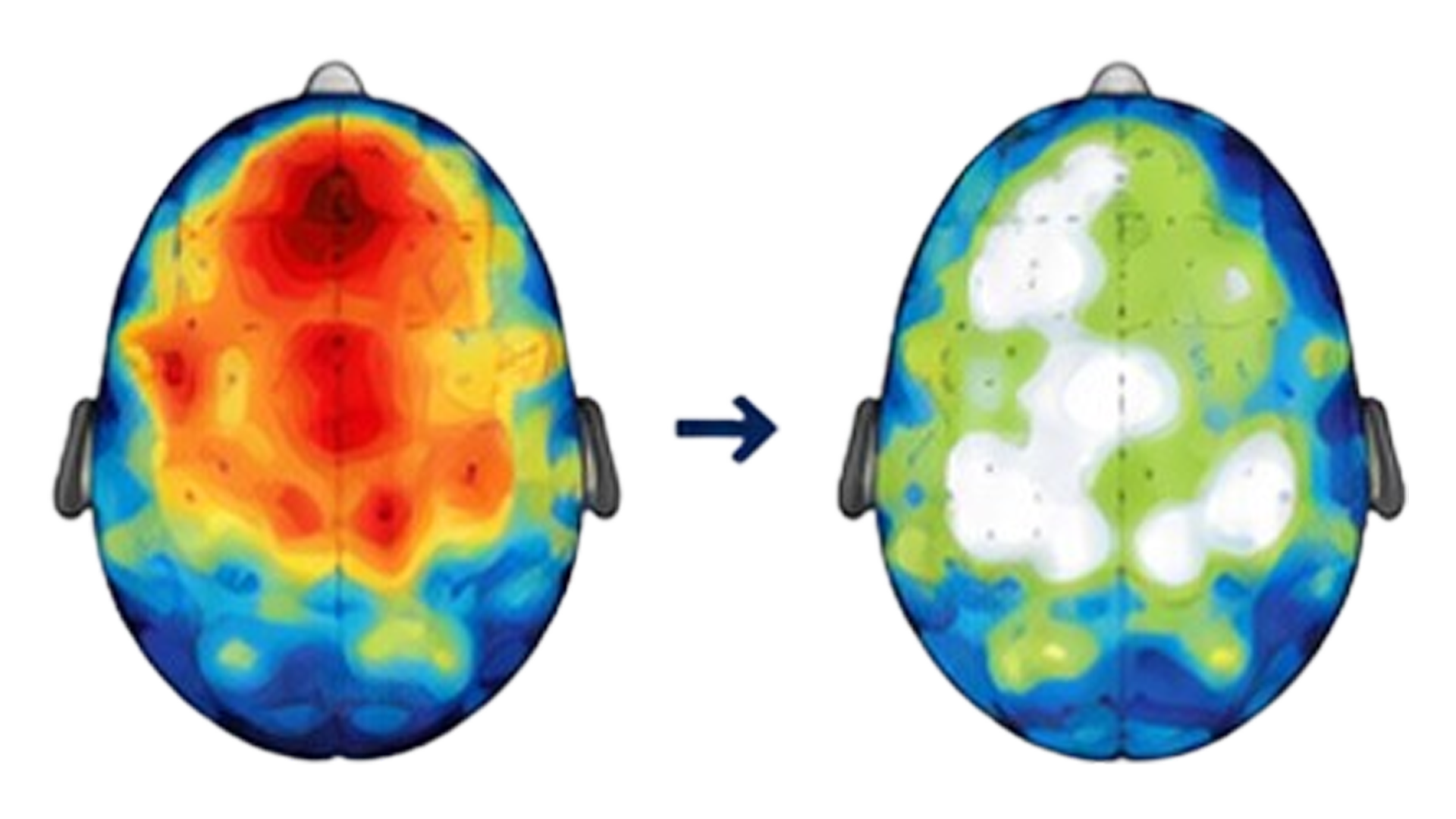
Most treatment starts with observation. At Horizon, it can also start with a map. Two teens can show what looks like the same anxiety while their brains are doing very different things underneath.

A Closer Look at Brain Function

Our Neuro Program is led by Dr. Amy Serin, PhD, our Director of Neuropsychology, and built on her clinical protocols. Qualifying teens in residential care receive:

  1. 01 A full 19-channel QEEG brain map, compared against healthy brains the same age.
  2. 02 Two validated psychological assessments, the PAI-A and BASC-3.
  3. 03 A personalized neurofeedback protocol, delivered over at least 20 sessions.
  4. 04 Follow-up maps at 20 sessions and at completion, with a written interpretation each time.

Your family keeps every report, useful to any provider your teen sees later.

Explore the Neuro Program →
Brain mapping and neurofeedback outcomes

Objective data. Personalized treatment. Measured progress.

Finishing the program is what moves the number.

Among Neuro Program teens who arrived in the elevated range, those who completed the program showed a higher rate of clinically significant improvement than those who started and stopped early.

Completed the program N = 30
50.0%

Reached clinically significant improvement

Stopped early N = 36
19.4%

Reached clinically significant improvement

Clinically significant improvement means at least a 5-point drop on the PHQ-9 or a 4-point drop on the GAD-7. This is a within-program comparison, not a randomized study. No outcome is guaranteed.

Learn about the Neuro Program →

The Neuro Program runs alongside residential treatment at our Arrowhead and Deer Valley locations, with up to 10 teens enrolled at a time. Our Chief Clinical Officer reviews each referral for fit. If the timing isn't right, we tell you what we'd want to see change and revisit in two to three weeks.

Choosing a Level of Care

Teens need different amounts of support at different points in treatment. An assessment guides the starting recommendation, and clinicians review it as your teen progresses. Learn more in our guide to understanding teen levels of care.

Whispering Wind

Residential Treatment

Residential care provides 24-hour supervision in a structured setting. Teens live at a Horizon facility, follow a daily treatment schedule and have scheduled weekly family visits. It may suit teens who need intensive support or keep struggling despite outpatient care.

PHP

Partial Hospitalization Program (PHP)

PHP provides full days of treatment, and teens generally return home in the evening. When appropriate, supportive housing is available through Horizon's partnership with Teen Pathways Alliance.

IOP

Intensive Outpatient Program (IOP)

IOP provides therapy several times a week while teens live at home, so they can practice skills between sessions and bring real challenges back to the group. In-person and telehealth options are available, depending on eligibility and clinical needs.

Outpatient

Outpatient Therapy

Outpatient therapy offers ongoing appointments for teens who can manage daily life with less intensive support. It can be a starting point or a way to maintain progress after a more structured program.

How We Approach Teen Mental Health Treatment

Your teen brings their own experiences and goals to treatment. We take time to understand what matters to them and how symptoms affect their life. Their plan may include individual therapy, group therapy, family therapy and medication management when clinically appropriate.

‍

Our clinicians use evidence-based approaches such as cognitive behavioral therapy and dialectical behavior therapy. CBT helps teens examine how thoughts and behavior connect. DBT teaches skills for managing strong emotions and navigating relationships. Teens practice both in treatment and carry them into situations at home.

‍

Diagnoses your teen arrives with get re-examined against their own data rather than carried forward from a chart, so treatment isn't built on a wrong label.

Family Support Throughout Treatment

Mental health concerns ripple through conversations and routines at home. You may feel caught between giving your teen space and keeping them safe. Family therapy gives you a place to work through that with professional guidance.

‍

Parents take part in care and learn ways to support their child's progress. Sessions may focus on communication or setting consistent boundaries. Our family liaison helps you understand the process and prepare for transitions.

The Horizon Guarantee

Our service standards are in writing, signed by our CEO at admission.
  • A named Care Coordinator who checks in every week
  • A weekly call with your teen's primary clinician
  • A written treatment plan within 72 hours of admission
  • Same-day notice of any medication change
  • A confirmed aftercare appointment before discharge
If we miss a listed commitment between admission and day seven after discharge, we refund your out-of-pocket costs. We don't promise outcomes; no program ethically can. We promise how we show up.
Explore The Horizon Guarantee

Supporting School and Everyday Life

Your teen doesn't have to lose a school year while getting better. Every family is offered enrollment in Alta Independent, a Cognia-accredited school, with a two-hour school block every weekday and two Behavioral Health Coaches in the room. How credits apply is always the receiving school's decision, whether that's Scottsdale Unified, Paradise Valley Unified or a private or charter school, and we tell you that up front. Learn more about our education services.

‍

Treatment also builds practical skills for everyday life, like managing time and handling responsibilities more independently. Fitness and wellness, expressive art, music and outdoor groups complement clinical sessions and help teens discover interests that support their well-being.

What Changed for Teens in Our Care

We publish our outcomes with the number of young people behind every figure, so you can compare us honestly with any program you are considering, including the ones with a Scottsdale address.

Symptoms eased

Average BASC-3 emotional symptom scores moved from about 65 (elevated) to about 53 by discharge (30 young people).

Out of the elevated range

9 of the 18 teens who arrived in the elevated range finished in the typical range for their age.

Stayed Well

1.1% of care episodes returned within 90 days of discharge (N = 702); 8.5% of young people ever returned, at any level of care (N = 612).

What to Expect From Admissions

The first call is your chance to say what you are seeing and ask anything. Tell us about any immediate safety concern and any treatment your teen has had before. Admissions walks you through the programs and arranges an assessment.

STEP 01

A Personal Response

Within 30 Minutes

A named admissions team member responds within 30 minutes during business hours.

STEP 02

After-Hours Response

Within 12 Hours

If you reach out after business hours, a member of the admissions team responds within 12 hours.

STEP 03

Insurance Benefits Check

Free · 1 Business Day

Receive a free benefits check within one business day to better understand your coverage.

STEP 04

Written Cost Estimate

Before You Commit

Receive a written out-of-pocket estimate before making a commitment to treatment.

Understanding Your Treatment Costs

Benefits vary by policy and level of care. Learn more about how teen treatment is paid for. Ask our admissions team about your coverage and available treatment options.

Ready to Talk With Our Admissions Team?

A real person is available during business hours to answer your questions and help you understand the next steps.

Call Our Admissions Team

Questions Scottsdale Parents Ask

Not inside city limits. Scottsdale families receive care at our Phoenix-area locations. Whispering Wind in North Phoenix is the closest clinic for most families. Residential homes are in Glendale, Peoria and Buckeye. PHP, IOP and outpatient therapy are also available by telehealth for Arizona families.

Yes. The Neuro Program is open at every level of care. The brain map and screening are offered to every family at every level of care, and neurofeedback training is available where your child's map shows a reason to train. Training is not offered at our Buckeye residential home; screening is.

We measure it. Your teen completes the PHQ-9 and GAD-7 on the first day, then every week, with a final measure at discharge. Teens in the Neuro Program also get a brain map at the start, at 20 sessions and at completion, and your family keeps every report.

You speak with your teen's primary clinician every week. Your Care Coordinator updates you every week, even when there is nothing new. Any change to your teen's medication plan is shared with you the same day it is ordered.

It depends on your teen's needs and progress, not a calendar. Most stays run 40 to 60 days; the range is 30 to 90 days. Many teens step down to PHP or IOP afterward. Our outcomes measure the residential window, which is a head start into the next level of care, not a finish line.

Every family is offered enrollment in Alta Independent, a Cognia-accredited school, with a two-hour block four days a week. The receiving school decides how credits apply, and we explain that before enrollment.

That is common, and you do not have to have the conversation figured out before you call. Admissions can talk you through it, and our guide on how to talk to your teen about getting help covers what to say.

Support Session

Supporting School And Everyday Life

Self-harm or suicidal thoughts need prompt attention. If your teen is in immediate danger, call 911 or go to the nearest emergency department.

Call or text 988 to reach the Suicide & Crisis Lifeline.6 Reach out to admissions after any needed emergency evaluation.

Find Teen Mental Health Treatment for Your Scottsdale Family

Reaching out gives your family a clear picture of what your teen needs and a practical next step. Horizon offers adolescent treatment with family involvement, measured progress and support at every level of care.

If you are exploring teen mental health treatment in Scottsdale, our admissions team can walk you through the options at our Phoenix-area locations.

Support Session